What is a braai?
The short answer: meat, fire, and the people standing around it. The long answer is the most South African story there is.
The short answer: meat, fire, and the people standing around it. The long answer is the most South African story there is.
A braai is the South African tradition of cooking meat over the open coals of a wood fire — and the social gathering that forms around that fire. The word is Afrikaans, short for braaivleis ("grilled meat"), and it is pronounced "bry" — rhyming with "dry". It long ago crossed every language barrier in the country: South Africans of every background braai, and the word works in English sentences as noun, verb and occasion. You are invited to a braai, you braai the wors, and the equipment itself is also the braai. One small word doing the work of three is your first clue that this is more than cooking.
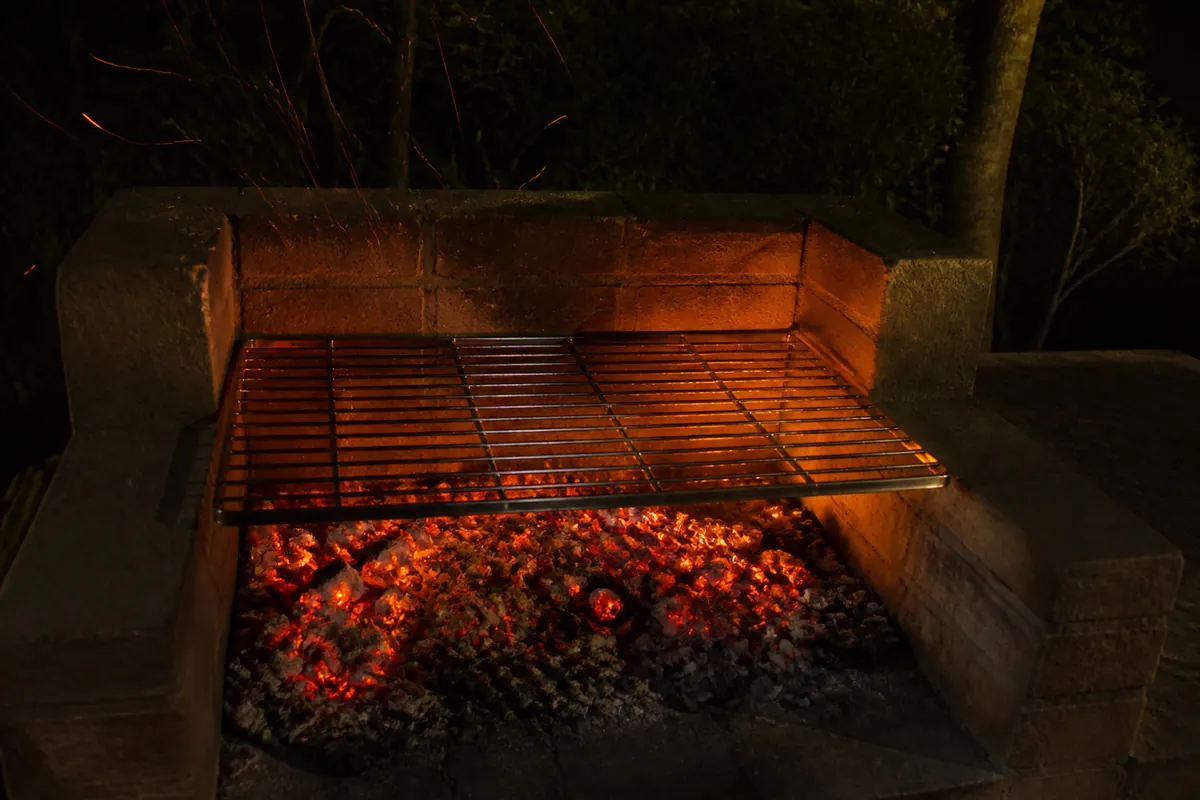
Visitors are politely corrected on this, so let's save you the embarrassment. A barbecue is a method; a braai is an institution. Three things make the difference. First, the fire: a proper braai burns real wood — kameeldoring, rooikrans, sekelbos — down to glowing coals, and the half hour of waiting is a feature, not a delay. Gas exists, and we don't speak of it. Second, the timeline: at a barbecue the fire serves the food; at a braai the food interrupts the fire. The flames are lit long before the meat and the coals glow long after it, because the fire is the venue. Third, the menu — no other fire on earth carries boerewors, braaibroodjies and pap en sous at the same time.
Every braai runs on unwritten rules, which we have taken the liberty of writing down — see The Rules of the Fire. The essentials: one person holds the tongs and therefore the floor (the braaier); guests advise once, from a distance, and never twice; nobody counts the tjops; and the last hour around the dying coals, long after the food, is where the braai actually happens. The bring en braai — everyone arrives with their own meat and a side dish — is the great South African social equaliser: the fire is provided, the rest is potluck.
The core repertoire: boerewors (the coriander-spiced sausage that is, by law, at least 90% meat), lamb tjops, chicken sosaties, steak, pork neck steaks and spare ribs, and on the coast a whole butterflied snoek with apricot basting. Alongside the meat: braaibroodjies (the braaied cheese, tomato and onion sandwich that is the true test of a braaier), roosterkoek baked on the grid, and stywe pap under a tomato-and-onion sous. All eight classics are in our recipe collection — each in story form and in an engineer's table, and the buying guidance lives in The Cuts.
The braai is one of very few things every South African community claims as its own — which is why 24 September, the Heritage Day public holiday, is celebrated as National Braai Day. In 2026 that is Thursday 24 September: one day when the whole country is encouraged to light a fire and gather around it. Whatever else divides us, nobody has to agree on anything at a braai except that the coals are almost ready.
Cooking meat over an open fire is as old as fire itself in southern Africa — this is, quite literally, one of the oldest places on earth where humans have gathered around coals. The word is younger: braai comes to Afrikaans from the Dutch braden, to roast, and by the twentieth century the braaivleisaand — the braaivleis evening — had become a fixture of South African social life. What began in one community long ago stopped belonging to it: from the family braai on the stoep to the roaring shisa nyama outside a township butchery, every South African culture now claims the fire, each with its own accent.
The most recent chapter is National Braai Day: since the mid-2000s, a campaign to have all South Africans celebrate Heritage Day, 24 September, the same way — around a fire. It stuck, because it merely made official what the country was doing anyway.
The quick version, for visitors decoding an invitation. The full Braaictionary — revived from this site's crowd-built 2009 original — has the lot, slang included.
| Word | Say it | Meaning |
|---|---|---|
| braai | bry | The fire, the event, and the act of cooking on it. Noun and verb. |
| braaivleis | bry-flayss | The meat itself — the older, fuller form of the word. |
| wors / boerewors | vorss | The sausage. Never pierced, seldom turned, always finished. |
| tjop | chop | A chop, usually lamb. The plural is "not enough". |
| sosatie | soh-sah-tee | A skewer of marinated meat — Cape Malay heritage. |
| braaibroodjie | bry-brue-key | Braaied sandwich: cheese, tomato, onion, chutney. Non-negotiable. |
| pap en sous | pup en soce | Maize porridge with tomato-onion relish. Feeds the nation. |
| bring en braai | — | Bring your own meat and a side; the host brings the fire. |
| kuier | kay-er | To visit, linger and talk — the braai's true purpose. |
| dop | dawp | A drink. A "chop en dop" is the minimalist braai format. |
| toeklap-rooster | too-klup roo-ster | The hinged grid that flips braaibroodjies as one. |
| braaier | bry-er | Whoever holds the tongs. Holds the floor too. |
Both, and also an adjective when required (braai tongs, braai day, braai weather). South African English absorbed it decades ago; no italics necessary on this side of the equator.
You can cook fine food on gas outdoors, and on a Tuesday night nobody will judge you loudly. But the coals are where the flavour and the ceremony live, so for the full occasion: wood first. Our Wood & Coals guide covers the woods, the hand test and the two-zone fire.
The fire needs 45–60 minutes to make coals, the meat needs 15–45 minutes depending on the cut, and the occasion needs the whole afternoon. Rushing any of the three is the only real way to do it wrong.
braai.co.za has been asking and answering this exact question since 17 June 2009 — this page is the modern successor of one of the oldest braai pages on the South African web, rebuilt in 2026 as part of the new braai.co.za: fire-craft, meat, recipes and Braai Day, all in one place.